 Yangbenwang
What is the purpose of electronic brochures? 3 truths factory owners should know
Last month, a sales representative in the auto parts export business complained to me: he had been communicating with a Turkish client for half a month, and finally the client said, "Send me the product information again." He quickly packaged a bunch of pictures and PDFs and sent them, but the client replied, "It's too messy, I can't find what I need," and then stopped replying.
Half a month of follow-up, ruined at the last step.
This isn't just his problem. I've asked at least twenty factory owners: When clients ask for information, what do you send? The answers are almost identical: pictures, PDFs, or a website link. Then I ask: What is the client's reaction after seeing it? Most remain silent.
Because the client didn't understand what they received.
The root of the problem lies in the phrase "electronic brochure." Many people think that an electronic brochure is simply a paper catalog converted into a PDF and sent to the client via WeChat.
Completely wrong.
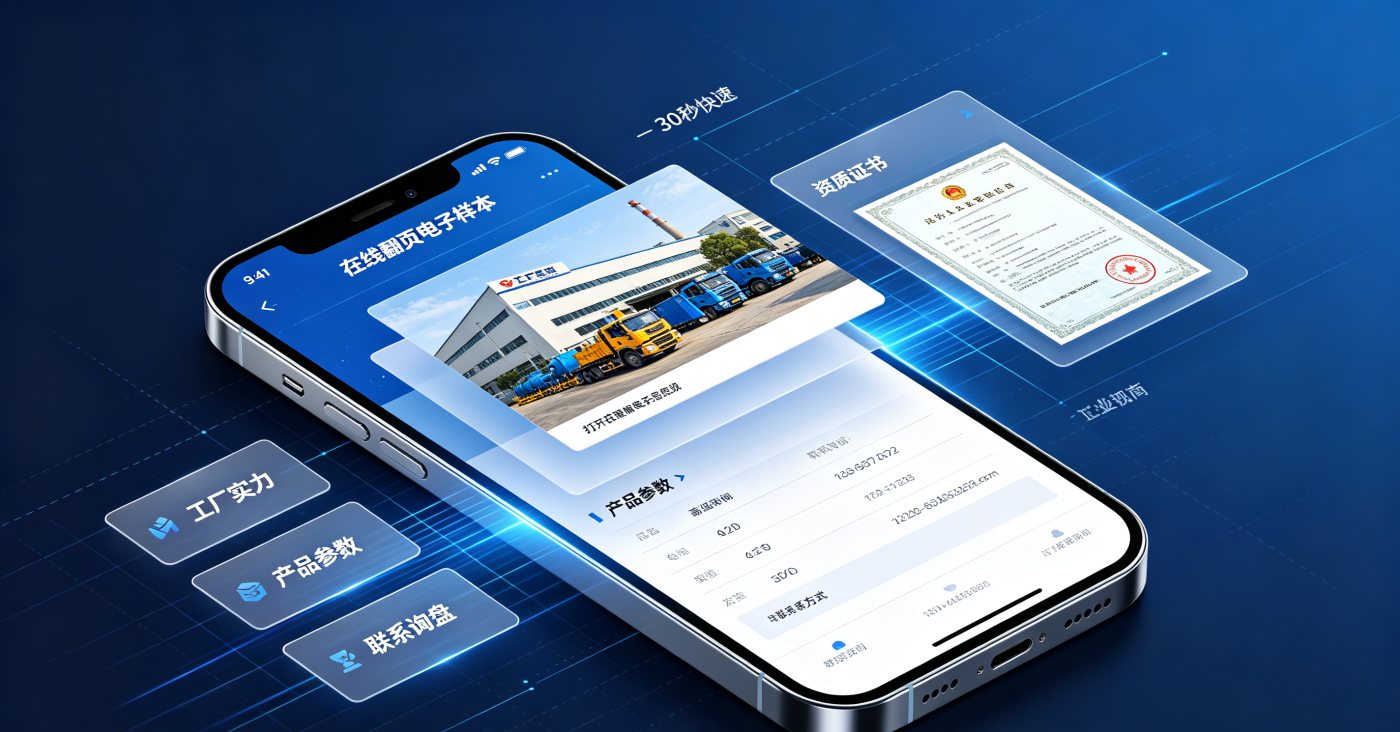
So what exactly is the purpose of an electronic brochure? Let's take the online brochures on Yangbenwang.com (www.yangbenwang.com) as an example to illustrate three key truths, each more striking than the last.
First Function: Understanding the Factory in 30 Seconds
You might disagree: How can 30 seconds be enough to see dozens of products from one factory?
Note that I said "understand," not "finish."
When a customer opens your company's traditional website, the homepage displays a large image, leading to three or four subpages where product information is hidden. They spend ages searching, unsure of what you do, your strengths, or your product lines. Three minutes pass, they're confused, close the page, and leave.
But the online brochures on Yangbenwang.com are different. They are logical and sequential: a cover page leads to company introduction, factory and equipment, testing instruments, certifications, and then product categories, product details, application scenarios, and professional parameters, page after page, like flipping through a meticulously arranged catalog. With a swipe of their finger, in 30 seconds, the customer understands everything about your company, what products you make, and your strengths. Customers don't want a mountain of information; they want to see the key points at a glance. If they understand it in 30 seconds, they'll want to continue the conversation. If they don't understand it in 30 seconds, giving them 3 hours won't help.
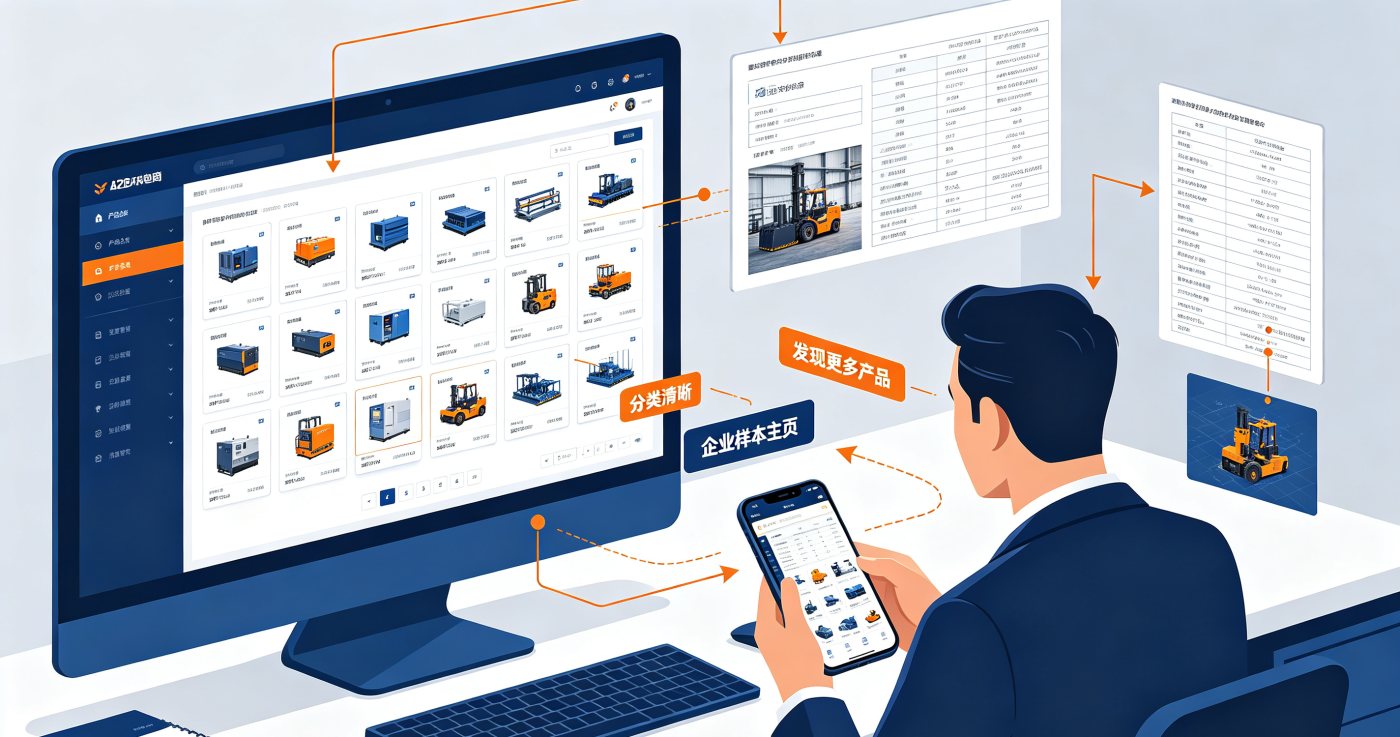
The second benefit: It lets customers "browse" on their own, instead of you sending them one product at a time.
Previously, salespeople dreaded customers asking, "Do you have any other products?" Sending a PDF with only one product. More questions, more sending. Back and forth, annoying the customer, tiring the salesperson.
Now, you send a link to the "Company Sample Homepage" on a sample website. Customers click through, all products are neatly arranged, clearly categorized, and they can easily find what they want. While browsing, a customer who initially only wanted one product might casually ask about two others.
That's how the average order value increases.
The third benefit: It lets electronic brochures "go out" and acquire customers on their own, instead of sitting idle on their phones.
This is the most valuable benefit.
After the electronic catalog is uploaded, the catalog website automatically extracts the product information, parameter data, and application scenarios, creating a page that complies with search engine rules. Major search engines like Baidu and Google will actively crawl this content.
What does this mean? It means that when a purchasing manager who has never heard of your factory searches for "precision bearing manufacturer customization" on Baidu, your electronic catalog page may directly appear in the search results. The customer clicks in, browses through it, finds it professional, leaves a comment, and a new deal is started from scratch.
And that's not all. The catalog website's backend can also help you submit industry articles, product guides, and technical insights. You can write an article like "Three Easily Overlooked Parameters in Deep Groove Ball Bearing Selection" and post it on the catalog website. When customers search for related questions, they see it, click to read it, and casually browse your electronic catalog, building trust.
Going a step further, this content accumulation is turning the catalog website into an industry knowledge base. Your electronic catalog, technical articles, and product guides are all part of this knowledge base. Now, AI models like Doubao, DeepSeek, Wenxin Yiyan, and ChatGPT prioritize searching for answers in well-structured and reliable knowledge bases when users ask questions like "Which bearing manufacturer is reliable?" or "How to choose deep groove ball bearings?". Your electronic samples have the opportunity to be recommended by AI. This is GEO—Generative Engine Optimization. While competitors are still waiting for customers to search, your factory is already being proactively mentioned by AI.
This is proactive customer acquisition. Electronic samples are no longer just lying in WeChat chat history waiting to be picked up; they proactively carry your product information to search engines and AI models to bring back customers who are looking for you.
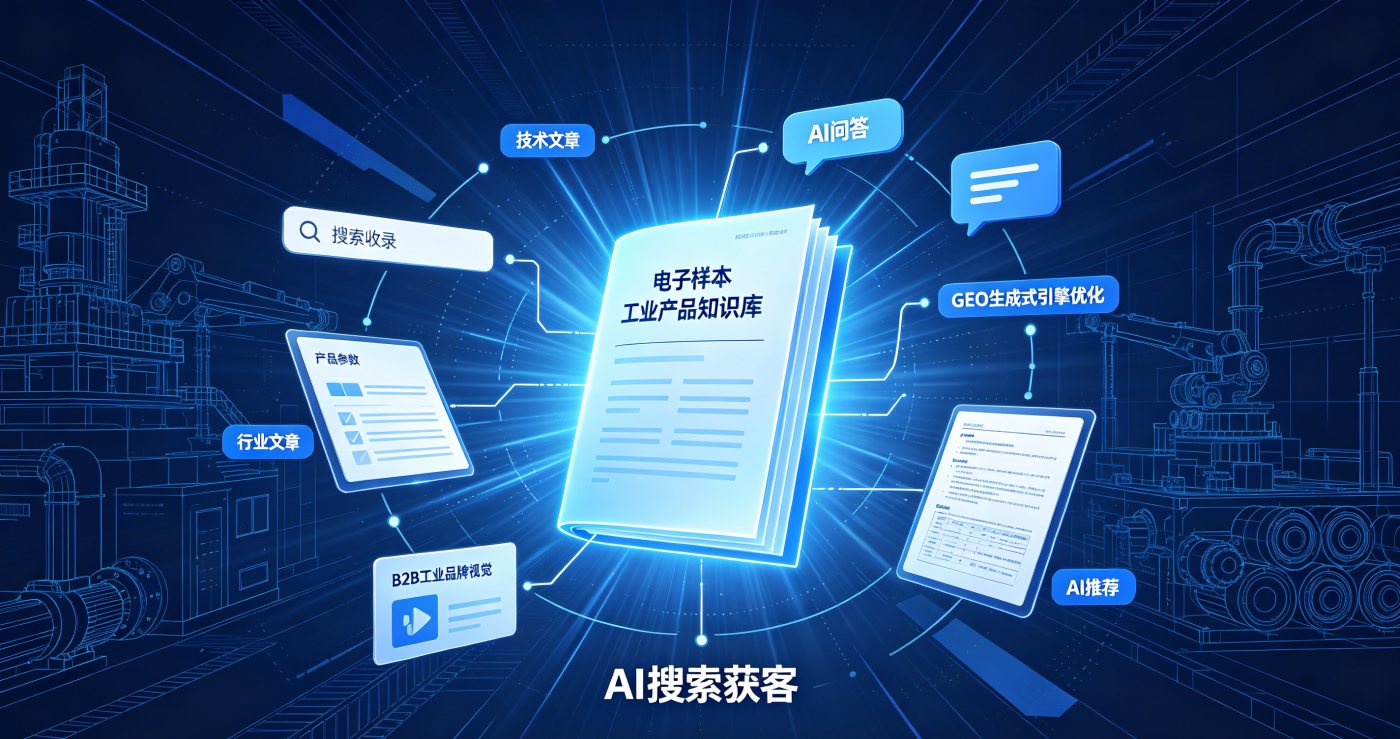
What role does the sample website play?
Simply put, electronic samples are the "weapons," and the sample website is the "arsenal + scouts + knowledge base."
By placing your electronic samples on the sample website, you have a unified online display platform: stable links, fast loading, and shareability. Meanwhile, SampleNet helps you with search engine indexing, content accumulation, and GEO model exposure, ensuring your e-brochures are not only seen by your current customers but also found by future customers searching or asking questions.
Returning to the initial question: What is the purpose of e-brochures?
The answer is threefold: Make them understandable to customers, affordable for customers to browse, and easily found by customers.
If your salespeople are still sending PDFs and saying "I'll send it to you," then half of your monthly advertising budget might be silently expiring on customers' phones.
Visit SampleNet and spend ten minutes creating a flip-page e-brochure to prevent your next inquiry from disappearing into the void.
Turn a page, take a step closer.
I am SampleNet www.yangbenwang.com , a knowledge base platform that provides online flip-page e-brochures and helps you acquire customers through AI search. Don't let your next inquiry disappear into the void again. Spend ten minutes to make your products visible, understandable, and sought out by customers.